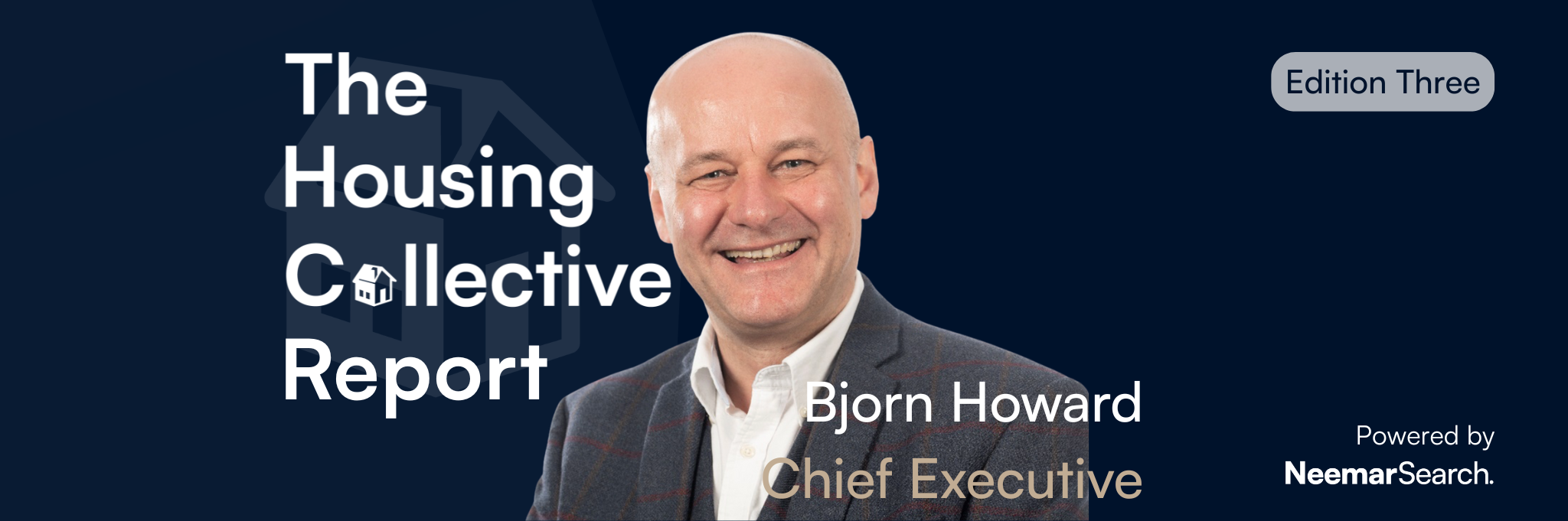
In this edition of The Housing Collective Report, we reflect on an in-depth and refreshing conversation with Bjorn Howard, Chief Executive of Aster Group. A long-serving sector leader known for his principled thinking and forward-leaning culture, Bjorn offered deeply practical insights into what it means to lead with clarity in a time of challenge, scrutiny and constant change.
What emerged was not just a commentary on agile working or sector resilience. It was a full-throated vision of leadership that values consistency, honesty, and long-term thinking over short-term noise.
Rethinking the Workplace: Principles Over Pressure
Aster has long championed a fully agile workforce. While many housing associations have retreated to more traditional office-based models, Aster has remained committed to flexibility and trust. Bjorn’s reasoning is both philosophical and pragmatic.
“The idea that we should all return to corporate offices... I think that's yesterday. We’ve moved on now.”
He does not dismiss the value of in-person interaction, but makes a strong case for avoiding rigid mandates. From property costs to recruitment, Bjorn believes remote flexibility supports both people and performance. As he puts it, serendipitous conversations matter, but they can coexist with intentional, distributed ways of working. The key is to design around how people want to work, not how leaders are used to working.
“If someone does their best work coming into an office every day, we should support that. But if someone thrives in Pembrokeshire or Spain, we should support that too.”
Long-Term Thinking in a Short-Term World
Bjorn defines Aster’s strategic priorities with elegant simplicity: invest in customer services, maintain existing homes, and build new ones. The art of leadership, he argues, is in balancing all three without neglecting any of them, especially during turbulent periods.
“Most of what we react to as a sector is short-term noise. But if you’re focusing on the next generation and the next 30 years, you make different decisions.”
This is where Bjorn’s clarity of thought stands out. In his view, short-term crises such as damp and mould, regulatory upheaval, and political uncertainty are real, but they should not derail long-term planning or undermine organisational confidence. His role, as he sees it, is to act as a custodian, preparing the organisation for the next generation of leadership.
“My job is to hand this on in a better state than I inherited it. That’s long-term thinking. That’s what matters.”
Culture, Trust and Cutting Through the Noise
One of the most compelling parts of the conversation was Bjorn’s reflection on leadership integrity in the face of cultural trends and sector fashions. He speaks candidly about resisting pressure to conform to popular slogans or cosmetic changes that lack depth.
“You have to cut out the external noise. If you're clear on your values and your people-first approach, you don’t need to react to every new headline.”
Bjorn’s views on returning to office mandates highlight this. He challenges leaders to ask themselves not what feels right to them, but what is right for their workforce.
“If you're bringing people back just because you have a beautiful HQ or because it's what you’re used to, then you're not leading for your people. You're leading for your own comfort.”
Leadership in Action: Honesty, Empathy and Stability
Bjorn’s leadership philosophy centres on authenticity and empathy. In contrast to more performative styles, his is understated but grounded.
“Never think you’re the most important person in the room. Whether you’re a chief executive or not, empathy and honesty are non-negotiable.”
He does not recommend leadership books. In fact, he explicitly warns against changing leadership styles every few months to reflect the latest bestseller. His message is clear: know who you are, lead with consistency, and stay rooted in the real-world needs of your people.
Aster’s Future Focus
Aster’s strategic direction remains steady. The focus is on delivering against its three core aims, investing in innovation both operationally and culturally, and staying alert to new opportunities such as the Enum initiative, which Bjorn believes could be "something very special."
His emphasis is on quality, not novelty. Growth will come, but not at the expense of balance or clarity of mission. Aster’s direction is not flashy. It is measured, long-term and built to last.
“We don’t need to be a trailblazer in everything. We just need to be consistently excellent in the things that matter most.”
Quick Reflections
As always, we closed with a few rapid-fire leadership questions. Bjorn’s responses were typically direct and honest:
Most valuable leadership lesson?
“Be honest about your mistakes.”
Advice for aspiring leaders?
“Be honest to yourself.”
Essential leadership traits today?
“Empathy, and thinking about others before yourself.”
Book recommendation?
“Don’t read leadership books. And if you do, don’t assume any one of them holds all the answers
Final Thoughts
Bjorn Howard’s approach to leadership is refreshing in its simplicity. He is not chasing trends, nor trying to reinvent the wheel. He leads by listening to his people, staying grounded in long-term principles, and committing to honesty over performance.
His leadership offers a model for those seeking to navigate complexity without losing sight of what really matters. In a sector often tempted by slogans and strategy churn, Bjorn’s voice is one of rare clarity and calm.